
In a world where cities are growing faster than governance can keep pace, and where climate unpredictability is testing the very limits of infrastructure — few individuals are addressing the problem at the root. V. R. Hari Balaji is one of them.
A Career Rerouted by Crisis
Hari’s professional beginnings were far removed from the policy rooms and disaster zones he now inhabits. Trained at the prestigious Swiss Hotel Management School and having worked across hospitality chains in Europe and the Middle East, his early career promised global luxury and upward corporate mobility.
But a pivotal moment altered that trajectory. On September 11, 2001, while mid-flight during the tragic attacks on the World Trade Center, his plane was diverted. What followed wasn’t just a physical rerouting — it was a deeper awakening.
“I realized systems can collapse — even the ones we think are indestructible,” he says. “And if we are not designing with people in mind, we’re not really designing at all.”
His resolve deepened during Hurricane Katrina’s aftermath in the U.S., where he witnessed firsthand the consequences of inadequate preparedness. That experience became a turning point. Hari returned to India, not to restart his career, but to reimagine it.
From Field Operations to Frameworks That Work
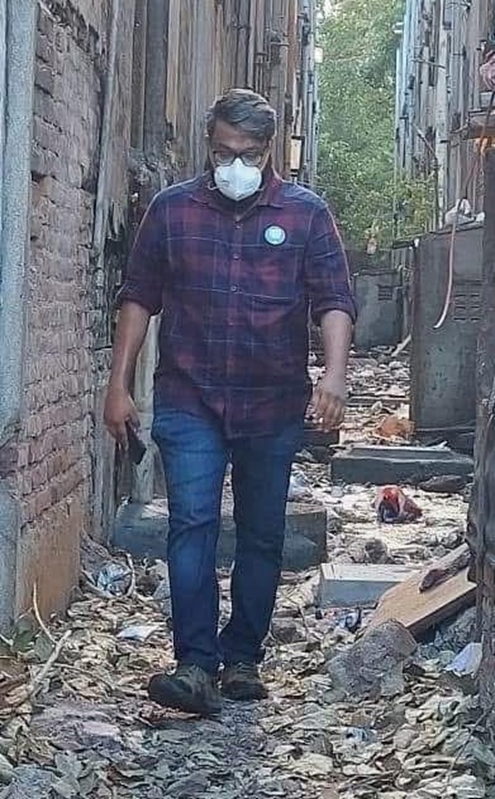
Today, Hari Balaji is known for translating complex humanitarian challenges into implementable civic solutions. Whether leading post-flood rehabilitation in Kerala’s tribal belts, coordinating pandemic response with UNICEF, or driving inter-agency emergency preparedness training across Tamil Nadu, his approach is consistent — build systems that are both resilient and respectful.
He doesn’t merely manage crises. He anticipates them. And more importantly, he ensures the response l eaves communities stronger than before.
His work is underscored by a principle often lost in policy documents: dignity by design.
Smart Cities, Smarter Systems
As Principal Consultant in Chennai’s sanitation reform initiative, Hari leads transformative efforts that integrate technology, governance, and community ownership.
During the city’s North-East monsoon season, his team developed real-time flood mapping, hyper-local alert systems, and digital coordination dashboards that brought together meteorological data, civic response units, and resident feedback
“Technology is not the goal,” he asserts. “It’s the bridge. A truly smart system learns, evolves, and earns trust over time.” His focus is clear: don’t digitize dysfunction. Redesign it.
Beyond the Classroom: Shaping Tomorrow’s Thinkers
Hari is also an academic mentor and visiting faculty at institutions like Saveetha School of Law and M.A.M. Engineering College. He is known for connecting theoretical models to ground realities, using real-world case studies drawn from his own fieldwork.
His communication style is grounded, accessible, and solution-driven — evident in his growing YouTube platform with over 30,000 subscribers.
His ability to break down complex governance issues into relatable narratives has made him a go-to voice for media outlets, including The Hindu and BBC Tamil, and a trusted advisor to policymakers.
Accolades Anchored in Impact
With awards such as the Seva Ratna and CSR & HR Excellence recognition, as well as certifications from Harvard Humanitarian Initiative, FEMA, and CDC Atlanta, Hari’s credibility is well-established. Yet, he remains focused not on accolades but outcomes.
“The real validation,” he says, “comes when a community no longer needs to raise a complaint — because the system is already listening.”

A Leadership Philosophy Grounded in Service
To emerging professionals in public service, Hari offers a grounded, practical message:
“Start by serving. Focus on one problem so deeply that you understand every variable. Only scale when the model can breathe without you.” He frequently critiques “impact theatre” — the performative activism often seen in today’s development discourse — and calls for long-term, community-owned transformation.
Designing a Legacy Through Systems That Last
Hari’s influence extends far beyond sanitation. His work is a living thesis in civic innovation — building systems that adapt to climate change, close access gaps, and reflect a city’s social contract.
His goal isn’t just resilience. It’s dignified resilience — where infrastructure restores trust, governance becomes participatory, and every citizen is accounted for in the design.
Closing Reflection
V. R. Hari Balaji’s career is a reminder that impactful leadership doesn’t always announce itself through titles or headlines. Sometimes, it’s found in the quiet clarity of systems that simply work — because someone took the time to listen, design, and lead with intent.
In an era dominated by smart city rhetoric, his message is quietly radical: “It’s not about being smart. It’s about being human.”